Consider a common scenario: a pharmaceutical manufacturing plant has identified the equipment most critical to the success of its processes and has begun tracking overall equipment effectiveness (OEE) for those assets. Management has set an ambitious OEE metric of 95% for those critical machines, and operators and technicians are collaborating closely to make sure they hit their benchmarks.
The team manages to bring all critical assets up to 95% OEE 24 hours a day, 7 days a week. However, overall company reporting still identifies a problem. Treatments from the production line are still shipping intermittently, and supply chain issues continue to be a problem. Supply shortages regularly pop up in key market areas, while other areas seem to be flooded with product, and those trends are increasingly hard to track. The process continues to have bottlenecks, even though essential equipment is running as well as could possibly be expected, given the pace of production (Figure 1).

Figure 1: Focusing on OEE in isolation can mask, or even create, operational bottlenecks.
An easy mistake
If this scenario sounds familiar, it is because it stems from a common misconception around the effective use of OEE. Many of today’s life sciences organizations are targeting OEE as a performance metric, but that strategy has significant drawbacks. Using OEE as a performance metric frequently leads to bad behaviors and poor operational excellence outcomes. Digging deeper into the above example—and some of its associated dynamics—helps illustrate why.
Bottlenecks come in many shapes and sizes, and many of them are not specific to equipment functionality. Therefore, if the operations team in the previous example is performing many of its tasks manually, they likely cannot manage the full spectrum of multivariate data necessary to see how OEE, or lack thereof, truly impacts the process.
For example, if the team has a scheduling process that is dependent on human intervention to track progress and ultimately measure adherence to schedule, their data is prone to more variation, less precision, and increased potential for bias in diagnosing bottlenecks. This occurs because as the team tries to drill down on operations and isolate bottlenecks, their manual procedures create a dataset that lacks precision, accuracy, and timeliness.
Operating in this manner can lead to incorrect conclusions for optimizing operations from an operational excellence standpoint. Often, it leads to wasted effort chasing the wrong things. In this particular case, it leads to incorrect use of the OEE metric. If such a team decides arbitrarily—or based on a flawed diagnosis of process bottlenecks—to constantly run their machines at 95% OEE, it means they are running the machines regardless of upstream and downstream performance, often isolated from true customer demand. That continuous machine operation can lead to an overproduction issue, which in turn can impact the business, create disruption in the supply chain, and ultimately harm business performance.
OEE as part of the bigger picture
OEE is far less valuable as an isolated performance metric outside of the context of the overall manufacturing process flow. Instead, OEE is intended to be a diagnostic metric to pinpoint sources of equipment-specific constraints that lead to bottlenecks in a process, and as a tool to isolate those constraint sources to allow faster identification and remediation of root cause.
Rather than focusing narrowly on OEE, plants should strive for improved operational performance rooted in lean principles. Teams should be focused on ensuring that product is flowing at the pace of customer demand, and when that isn’t happening, they should use the most effective tools to identify what is causing the undesired pace. OEE is a potential indicator, but one that must be examined in context, and it is rarely the place to start (Figure 2).
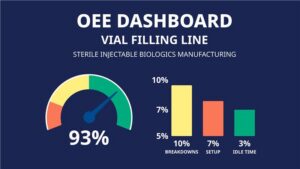
Figure 2: To be an effective metric, OEE needs context.
Scheduling for success
One of the key tools for helping a plant run lean yet efficiently is real time scheduling (RTS) software. Moving from manual paper schedules to an automated system gives an operations team insight into if they are completing process steps on time, and in turn, delivering product on time—a critical metric to determine successful operation and identify the existence of bottlenecks. If a team does not know whether it is on or off schedule in the first place, it is nearly impossible to implement strategies to eliminate bottlenecks and increase operational excellence. Paper schedules, spreadsheets, and dry erase boards are simply not up to the task of maintaining those complex schedules to achieve marked improvement.
RTS software can run in an offline mode where teams maintain a model via manual updates. However, the real strength of RTS software is its ability to integrate with control systems, manufacturing execution systems, and enterprise systems to track operations performance automatically, enabled by increasing digital plant maturity to drive a more connected and automated operations management ecosystem.
The first step on the journey to higher levels of digital plant maturity is to automate and integrate production processes end-to-end across the plant—with appropriate context—via seamlessly integrated control and sensing technologies based on a boundless automation vision for seamless data mobility. Using the multivariate data available from that architecture, the team can then leverage continuous data sources to determine production performance relative to the latest schedule.
Armed with this valuable information, the team can identify whether it is progressing according to product demand. If it is not, that is an indication there is a problem somewhere in the value stream.
However, once the team has identified a problem in the value stream, it is not yet time to start calculating and monitoring OEE. Just because a bottleneck exists in the process does not mean there is an equipment problem. The cause could be a labor issue, a material supply problem, or something else entirely.
Simulation identifies solutions
Identifying the cause of a bottleneck is an area where automation can be of tremendous assistance. The valuable multivariate data from scheduling, production, and reliability systems can be fed directly into discrete event simulation (DES) software to generate more granular results. Debottlenecking capabilities in modern DES software can use rich, multivariate data to identify which process steps have problems, and to identify what is causing those problems, even pointing out a specific, problematic piece of equipment.
Once the team has a location for the bottleneck in a process and knows that the problem is machine-related, they can finally begin focusing on OEE. Knowing there is a problem with a machine is helpful, but the team still needs to know where the constraint is coming from, whether it is an issue changing over from product to product, managing equipment setup, an impending equipment failure, or something else altogether.
With the power of smart instrumentation tied into a control system’s orchestration layer, the team can send critical process data via an edge environment to higher level analytics tools. Those tools can look across many systems to form an OEE metric to see why the machine is not working, identify the cause, and drive more targeted actions toward resolving that bottleneck.
The path to OEE
To illustrate, consider a pharmaceutical plant struggling to keep pace with customer demand. If the operations team is operating a connected or predictive plant, they can turn to their RTS software as soon as they identify the supply issue. The RTS software can then identify an extended steam cycle, for example, limiting the plant’s ability to run at the pace of customer demand.
After pinpointing the location of the problem, the team runs the contextualized data through their DES software, which uses the multivariate datasets to identify the delay stems from a steam trap not sealing at the right temperature, extending the steam cycle. By leveraging that data, the team can perform OEE analysis to identify the root cause and take corrective action.
It might seem as though starting with OEE could have worked in this situation, and in a sense, it could have. However, while attacking the problem with OEE in isolation as a performance metric would likely have allowed the team to fix the steam trap and shorten the steam cycle, without context it would likely also have required them to push all their essential equipment equally hard. Not only would this take valuable time away from operators and technicians, forcing them to spend their time on less value-add tasks, but it also might have created problems upstream or downstream as equipment was pushed to a higher run rate than necessary.
Limiting need for OEE
In many cases, the issues that require OEE analytics can also be identified preemptively using the same predictive maintenance technologies that support a thorough OEE analysis. Because the technologies necessary for OEE can be used to help teams fix equipment before it fails, a connected plant can often avoid getting to the point of bottlenecks. Instead, the team can use reliability solutions to identify what is going to go wrong before failure occurs, then use RTS to identify places in the schedule where the maintenance teams can perform repairs before they cause problems (Figure 3).

Figure 3: Real-time scheduling and proper reliability strategies can help support OEE.
In essence, in a holistic automation environment, the very tools that support OEE can prevent the plant from getting to the stage where it is needed to solve a production problem. OEE can help pinpoint the root cause of equipment constraints within plant processes, but if the plant takes a preventative approach to keep systems as healthy as possible, it will rarely have to.
Getting started
Building the automation ecosystem necessary to run the plant at a predictable pace as a function of demand can seem like a daunting task. However, the steps necessary to implement these types of systems are strategies the operations and maintenance teams should already be following to improve their digital maturity, and to preserve the ability to scale up and scale out as treatments prove successful and demand increases.
The first step is ensuring the plant has modern, well-defined process engineering in place. Maintaining the ability to meet customer needs means designing and supporting a process that is engineered to flow at that specific pace. Teams must take many elements into account, including automation hardware and software, material flow, equipment utilization, labor interaction with the process, and other factors. All these elements should be clearly defined and regularly evaluated and updated to meet current standards.
The next step is to evaluate where the plant is on the digital plant maturity model, always striving to move away from paper-based strategies toward fully automated to continually improve processes. If teams struggle to meet demand and want to begin to eliminate time loss due to process variation and manual intervention, automation is the answer. To accomplish that goal, teams need measurement and process control technologies that close the loop between measurement and action—motors, valves, and more, all working together with inline sensors for real-time control—and moving the associated datasets up to high-level analytics.
As teams lock in those technologies, they can increase the use of digital technologies to implement full digitalization, capturing integrated data so that as they automate processes, they are primarily monitoring the movement of product through automated equipment. This approach can eliminate the delays, variation, and errors that come from human intervention. At that stage, the team can layer in information technology solutions, like fully integrated manufacturing execution systems, to connect higher-level operations management functions.
Every stage of this process is achievable, and nobody starts at the top. Ultimately, the most successful life sciences companies partner with a trusted automation solutions partner. An expert partner will have a portfolio of solutions based on decades of industry expertise ready to meet the unique needs of any life sciences organization. Armed with that portfolio and expert knowledge, teams can assess their current state and successfully drive toward a more automated future.
OEE is critical, in context
In isolation, OEE focuses on a piece of equipment and forces a team to build goals around that machine. Such a strategy puts a focus on the equipment, not on the product and value stream. Operational excellence, however, relies on operators focusing on what is most important to move product forward in a controlled, safe, compliant fashion, at the pace of customer demand.
Accomplishing that goal means starting with adherence to schedule, then drilling down to isolate whether bottlenecks stem from materials, labor, or machines. If—and only if—equipment is the problem, OEE becomes a valuable metric to determine what the team needs to address to resolve a bottleneck or constraint.

Christian Berg
About the author
Christian Berg is an enterprise solutions architect consultant for Emerson with over 25 years of life sciences industry experience. He holds a BS in biophysics from California Lutheran University and an MS in organizational Leadership from Regis University. He also has black belt certifications in Six Sigma methodology and lean transformation.
All figures courtesy of Emerson



Tell Us What You Think!