
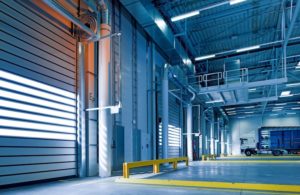
Image courtesy of Pixabay
Global supply chains have arguably seen more disruption in the past year than they have seen in decades.
Pharmaceutical supply chains were especially vulnerable in the early days of the COVID-19 pandemic, prompting a rethink of supply chain management for the industry.
Another wrinkle is a recent executive order from President Biden, which prompted a review of critical supply chains including for pharmaceuticals and related supplies.
To learn more about the quickly moving landscape, we reached out to William Wappler, the founder and CEO of supply chain specialist Surgere. In the following interview, Wappler shares his thoughts on broad advances in supply chain management including the challenges and possibilities of IoT technology in the sector. He also touches on inbound and outbound logistics considerations for pharmaceutical companies.
What are some of the most important ways that the best practices for supply chain management have changed over the past year?
 Wappler: We currently see three supply chain management best practices that are evolutionary in scope yet have a revolutionary impact including the following:
- High accuracy and high fidelity data.
- Data analytics applied deeper and with more relevance to supply chain operations.
- Supply chain autonomy.
First, let’s cover high accuracy and high fidelity data. To introduce meaningful change in today’s supply chains, whether they are simple-local, complex and secure, global and interconnected, or critical cold chains, companies must have a firm foundation built on accurate data.
Without high fidelity data, all debate regarding the nature and health of a supply chain is constructed on supposition. Fortunately, the U.S. has many supply chain practitioners who are rather good at intuitive estimation. However, increasing complexity has made intuitive management impractical and lacking in reasonable credibility. And that leads to another challenge — lack of credible information.
Lack of credible information is costly. How can you model or test supply chain redesign scenarios or sustainability options without accurate data? And without accurate data, how can you tell if your concepts or practices are succeeding? You can’t.
Industries and companies that understand the importance of data accuracy, even if they are not yet fully equipped to solve their specific problems, are the ones that will become flexible and scalable to supply chain stressors. This dawning of the problem has been evolving during the past three decades. It has also grown in parallel to technology, first with ERP to automate systems, then with cellular communication, and now with the explosive growth of IoT data capture and use.

High fidelity data can enable complete visibility into complex supply chains. Image courtesy of Surgere
We see the financial impact of IoT data every day. A recent study in late 2020 by Automation World found an expected increase of 91% in data and analytics spend for 2021.
Deep data analytics is the second innovation supply chain best practices that we believe is a crucial component of today’s business environment. It supports both lean and market adaptation efforts.
Have we used data in the past? Yes, of course.
Was it nearly as insightful or commanding as it is today? Not even close.
The problem has been and remains the viability and accuracy of the analytics. Lack of data accuracy and data integrity is the primary reason for the failure of so many analytics companies. It’s hard to see through muddy water.
IoT technologies create many more data points across a greater field of view. Analytics have become a looking glass into the life of the supply chain, creating unlimited opportunities for business intelligence and analytics.
Now it’s important to talk about the future and the importance of autonomy.
Once IoT has become ubiquitous, and analytics reflect reality, the final step will be the move to machine learning (ML) and artificial intelligence (AI) to run supply chains.
The massive amounts of data and the need for immediacy will demand ML to synthesize the information. AI will come along to support autonomous decision-making. All of this is a natural evolution and logical consequence. We believe this last piece is inevitable and will provide a better life as a result. It feeds into sustainability, changing geopolitical influences, rapidity of change in consumer demand, and ecological improvements. These ambitions are obtainable with high-fidelity data, meaningful analytics and support from intelligent networks. This represents our future.
Could you summarize how Biden’s executive order concerning the supply chain could change supplier relationship management?
Wappler: We believe that President Biden and the federal government have sent messages that translate to the urgency of areas within a problem without addressing solutions.
We see elements within supply chain management that are being called out. Each of the elements points to risk management, not the advancement of the practice itself. In this case, we are called to action regarding cybersecurity and point-specific sensitivities such as distance and potential interruption. Every supply chain practitioner should be already focused on these issues, and if they aren’t, they have had a very bad year and will see it worsen.
How mature is IoT adoption in the logistics industry at large and in the pharma industry in particular?
Wappler: Of all supply chain visibility challenges or viability of IoT data capture points, logistics is the most difficult, the most promising, and the most elusive problems to solve.
Supply chain folks can talk all day long about the reasons for the failure of IoT in the logistics space. Think about the number of trailers on the road, the number of transactions to follow and manage, the number of data collection devices required, the automation platform required, the need for data interpretation and integration, and the lack of data specification. The list of challenges goes far beyond these examples.
Specifically, to outbound pharma requirements for data capture, the introduction of multiple data collection methodologies necessary to bring the product to market and distribution to a widely varied user community may be the most difficult. Vision technology, an AI concept that allows for the capture of images and object detection to help with fraud and identity issues, works perfectly in the manufacturing space and the intimate packaging space but does not work in warehouse management or transportation packaging which feeds logistics.
Inbound logistics is much easier to manage not only in pharma but in the supply chain in general because the number of suppliers is smaller and the ability to integrate information is easier.
Inbound supply chains are stable and mature. The supply chains are tightly managed and visible. There are still on-going problems to deal with relative to optimizing the inbound material and supply chains, however, the challenge is less daunting, and technology is catching up to the need.
What are some of the key ways that IoT technology can help pharma companies manage and automate their cold chain logistics?
Wappler: Let’s start with what IoT is and then what IoT can be.
IoT is nothing more than devices that capture information and then communicate that information over the Internet.
Our cell phones can be considered IoT devices, as can our new refrigerator that helps us order a new gallon of milk.
IoT devices can measure and help manage an incredible amount of data types and metrics.
At Surgere, we have a cold chain client that is deploying IoT devices to capture information at every point in the supply chain including product identity, location and environmental conditions both inside and outside of the shipping container. Their IoT device also captures time between refrigeration and any material nearing an alert condition.
Alerts related to which material and containers need attention are much more accurate and timelier when information is captured through automation.
IoT is the foundational technology necessary to allow the cold chain to grow successfully, whether the basis is biologics or pharmaceuticals.
Where do you see the adoption of blockchain in logistics now? How rapidly is it being adopted?
Wappler: Blockchain provides an automated ledger that supports verification and serves as a method to ensure transactions are documented.
We use blockchain in the aerospace industry to provide part provenance and part genealogy. Aerospace cannot allow counterfeit materials to be attached to an airframe, or used in a production process. It could lead to a potential disaster. The pharmaceutical industry shares these concerns. Counterfeit ingredients, mislabeled products or products shipped through the system at the wrong temperature or environment can be deadly. Our experience has shown blockchain to be a valuable technology when and only when the entries are absolutely accurate.
IoT will help scale and add velocity to blockchain deployment and adherence.
What are some examples of how digital twins can help pharma companies improve their supply chain?
Wappler: The digital twins concept is being adopted in many industries, with the pharmaceutical manufacturing and distribution being a prominent area.
As with any digital twin program, the usefulness of creating an automated mirror of what is taking place in the physical world is useful for corrective action and predictive analysis. Modeling supply chain behaviors and potential outcomes using digital twins will become more common and provide useful information for supply chain design and optimization analysis. We expect digital twin technology will grow exponentially as IoT devices and networks become more sophisticated and prevalent. It’s important and it’s coming.
In the pharmaceutical supply chain, digital twinning is vital to building process models for verification and alert mechanisms. For example, a client we work with is deploying digital twinning to mirror the cold chain warehouse and distribution processes. Specifically, inbound bio-test samples will be viewed in a digital twin environment. Once constructed, the digital twin environment will be dissected for point-specific process steps, where virtual testing and process improvement can be performed for redesign opportunities that will provide distribution optimization and alert/notification thresholds.
The benefits of digital twins include decreases in lost product, decreases in environmental waste, an increase in productivity, proof and validity of biologics treatment and condition, and finally improvement in identity and location of samples and products.


Tell Us What You Think!